
West Des Moines, IA · Garage Door Service
What West Des Moines Weather Does to an Older Garage Door
West Des Moines homes span 1938 to 2009 construction with a cold, moderate climate band. See what that mix of door age and weather means for your garage door.
- Repairs & new doors
- Springs & openers
- Serving 4 nearby communities
What Changes With the Season
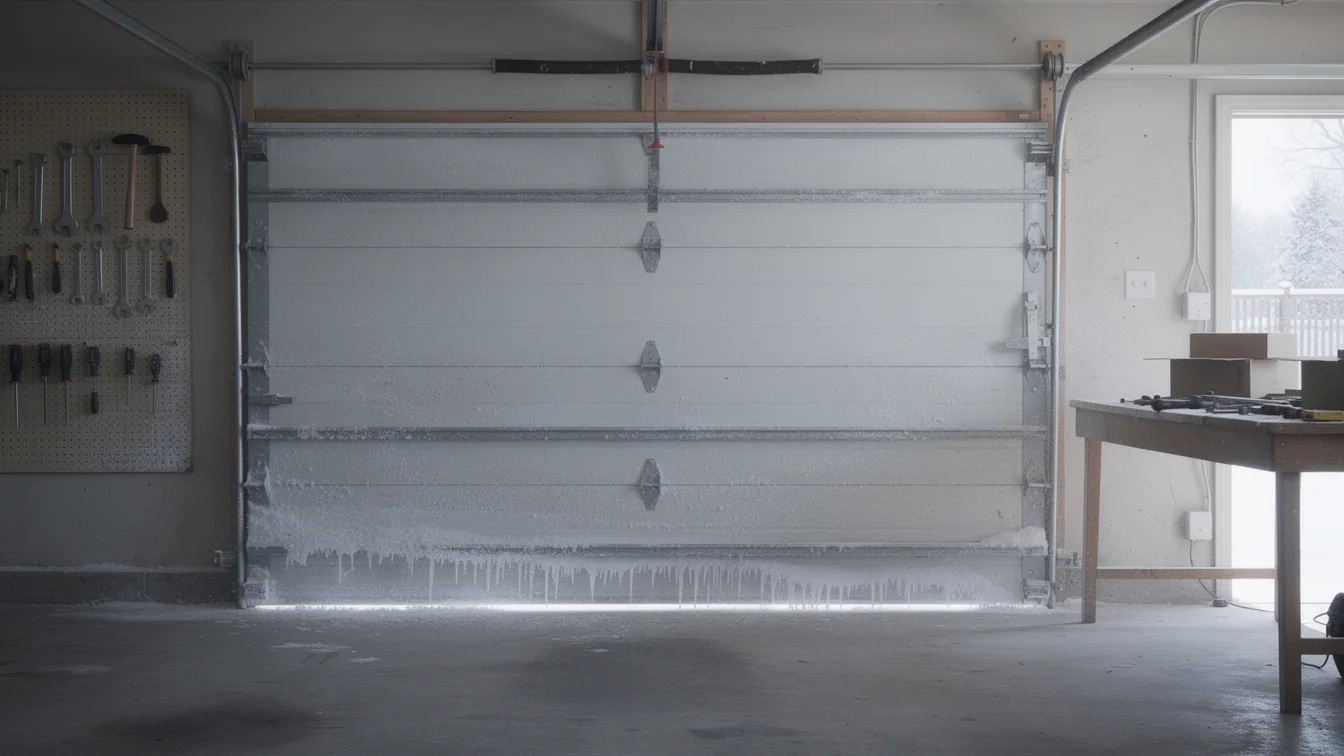
West Des Moines sits in a cold, moderate climate band, and the swing between a January deep freeze and a July heat spike puts real stress on a door that wasn't built for either extreme. Most of the houses here went up somewhere between 1938 and 2009, with the bulk of that stock dating to the 1980s and 90s across the subdivisions that make up this city. That matters because a steel sectional door from that era was spec'd to building codes and insulation standards that are decades out of date. When the temperature drops hard overnight, the steel contracts, and on a door that's been running the same torsion spring since it was installed, you feel it as a door that suddenly needs a shove to get moving, or an opener that strains and stalls halfway up. Come spring, the thaw brings the opposite problem: panels that swelled slightly over winter settle back, and hardware that was fine in January starts rattling loose. None of this is damage exactly - it's a 30- to 40-year-old door doing what steel and nylon do when the weather moves 60 degrees in a season. The fix usually isn't new weatherstripping. It's catching the spring tension and track alignment before the swing finds the weak point.
What Local Conditions Do
A cold, moderate climate band means West Des Moines gets real freeze depth in the ground and real humidity swings above it. On an older torsion system, cold makes the grease inside the bearings stiffen, which is why a door that opened quiet in August starts groaning in December. Nylon rollers that have gone brittle from UV and years of temperature cycling are more likely to crack exactly when a hard freeze hits, not gradually - they go from fine to split in one cold snap. Across the 26 named areas that make up most of this city's housing stock, construction dates land mostly in the 1980s and 90s, which means a lot of doors are at the point in their life where the factory lubrication and seals have aged out, right as the climate stress peaks. The median household income here, just under $95,744, means a fair number of owners are in a position to replace a worn door with an insulated one rather than patch the same hardware every winter - and for a door that's been fighting a 60-degree seasonal swing for 30-plus years, that's often the better math than another spring repair.
What Is Going On
Here's the mechanical version of what's happening. A torsion spring is rated for a set number of open-close cycles, and cold weather adds load to every one of them - the spring has to work harder to lift a door that's slightly stiffer from the cold, which eats into that cycle count faster than the manufacturer's rating assumes. On a house built in the 1980s or 90s, that spring has had three or four decades of winters to use up its life, and a lot of them are close to the end whether or not the owner's noticed yet. Steel panels contract slightly in hard cold, which can throw off a track alignment that was set true when the door was installed - on an older house, the garage slab has usually shifted a little too, so track and panel are both moving, just not together. The result shows up as a door that binds in one spot, or an opener that reverses on its own because the safety sensors are catching a shadow or a slight misalignment that only appears below freezing. None of this is exotic. It's ordinary wear meeting an ordinary cold snap on hardware that's been in service since the 1980s or 90s.
Checking It Yourself
You can catch most of this before it strands you with the car inside. Pull the manual release and lift the door by hand - it should move smoothly and stay roughly where you let go. If it drops or flies up, the spring tension's off, and that's not a DIY adjustment; torsion springs store enough force to break a wrist and you're better off calling for that one. Look at the rollers where the door curves onto the horizontal track - if they're cracked, flat on one side, or missing a chunk of nylon, replace them before a hard freeze finishes them off. Run a hand along the weatherstrip at the bottom; on a door from the 1980s or 90s it's probably been replaced once already, and if it's cracked or compressed flat it's not sealing out the cold at all. Listen for the sound change between warm and cold months - a grinding or groaning that wasn't there in summer usually means the lubricant in the opener's gears or the bearings has stiffened, and a silicone-based lubricant, not grease, which thickens further in the cold, fixes most of it. What you can't check from the ground is spring tension and cable wear - those need a trained eye and the right tools, and that's where we draw the line between homeowner maintenance and a service call.
Frequently asked questions
Why does my garage door get harder to open in winter in West Des Moines?
The cold, moderate climate here stiffens the grease in the torsion spring and bearings, and steel panels contract slightly in a hard freeze. On a door that's decades old, that extra resistance is often enough to make an opener strain or a door need a shove to start moving.
My house was built in the 1980s or 90s - is the original door still safe?
Most houses in this city fall in that construction window, and a lot of the original doors are still running the factory torsion spring. Age alone isn't a safety issue, but a spring that old is closer to the end of its rated cycle count, especially after years of cold-weather load.
Do I need an insulated door given the local climate?
With a cold, moderate climate band and a median household income near $95,744, a lot of owners here find an insulated replacement pays for itself over repeatedly patching an older uninsulated door through the seasonal swing. It's not required, but it changes the math on repair versus replace.
What can I check myself before calling someone?
Lift the door by hand to check balance, inspect rollers for cracks, and check the bottom weatherstrip for compression or cracking. Spring tension and cable wear aren't safe DIY checks - those need a trained eye and the right tools.
Related garage door services in West Des Moines
More garage door guides
Book garage door service in West Des Moines
Call now or request a quote - tell us what the door is doing and where you are.