
West Des Moines, IA · Garage Door Service
Garage Door Panel Replacement for West Des Moines Homes
Cracked or dented panels are common on West Des Moines homes built since the 1980s. Here's why they fail and what replacement involves for this local area.
- Repairs & new doors
- Springs & openers
- Serving 4 nearby communities
What Causes It Around Here
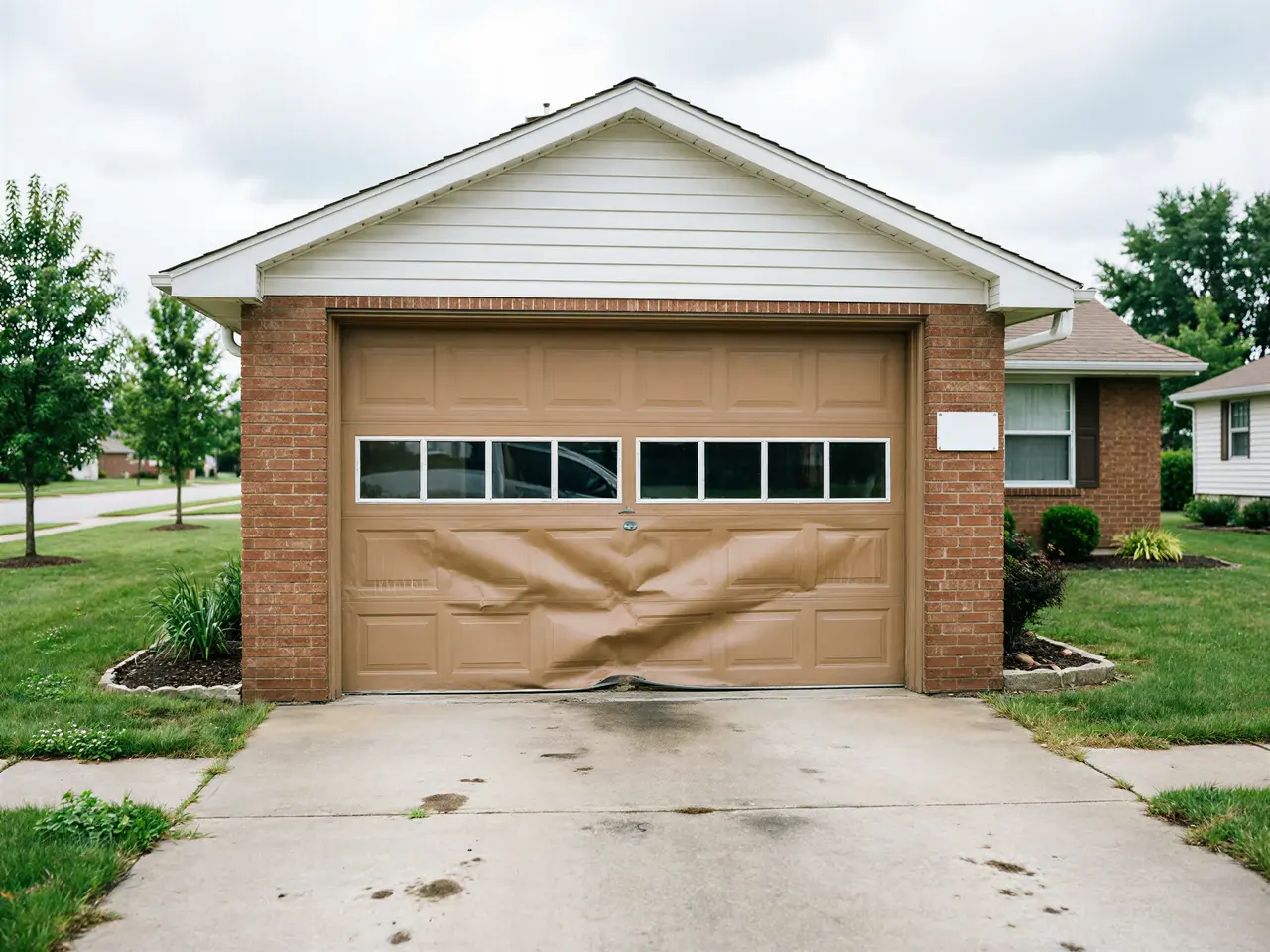
Most of the garage doors in this service area went up on houses built between 1938 and 2009, with the bulk of that stock dating to the 1980s and 90s across the 26 communities we cover. That era of door is almost always steel-panel construction, often a thinner gauge than what gets installed today, and it was never built to last forever. Add in a cold climate with real freeze-thaw swings, and you get a specific failure pattern: steel contracts hard in deep cold, and a door that's already got a dent or a weak seam from twenty-some winters starts to crease along the same line every time it closes. Panels near the bottom take the worst of it - they're the ones that catch road salt spray, snowplow-thrown ice chunks, and the occasional bump from a car bumper backing out on a dark January morning. On a door this age, one bad panel is rarely an isolated event. The metal around it has usually fatigued too, which is why a patch job sometimes just moves the problem to the next panel over within a season or two.
How It Shows Up
The most common call we get is a horizontal crease across one panel, usually the second or third section up, where a door got hit or caught uneven ground. On insulated doors from the 80s and 90s, you'll also see delamination - the steel skin separating from the foam core, which shows up as a soft spot you can press in with a thumb. Rust is the other big one. It starts at the seams where water sits after melting snow runs down the door face, and on a panel that's already flexed from a dent, rust eats through faster because the paint coating cracked at the bend line. Some homeowners notice it first as a door that doesn't seal tight at the bottom corner - that's usually a warped or bowed panel pulling the weatherstrip away from the floor. None of this is cosmetic once it affects how the panel tracks; a bowed section can bind against the rollers and put extra strain on the opener motor, which turns a $200 panel problem into a bigger bill if it sits too long.
Stocked Parts
We keep common panel sections on hand that match the standard sizes used across West Des Moines's 1980s and 90s housing stock - the sizing and ribbing profiles that showed up on most builder-grade doors from that period. Matching color and finish gets harder the older the door is, since manufacturers change their panel lines over the years, and we'll tell you up front if an exact match isn't realistic. That's the honest limit here: on a door past a certain age, we may be able to get a structurally correct panel but not one that's invisible next to the others, and a repainted or slightly mismatched section is sometimes the right call over ordering a full custom replacement with a long lead time. For doors still in production, we can usually get an exact or close match panel without the wait. We'll check the door's data plate for the model info before quoting anything, since guessing on a panel match wastes everyone's time.
What the Repair Takes
A single panel swap is a few hours of work: pull the damaged section, disconnect it from the adjoining panels and hardware, set the new one, and re-align the tracks and rollers so the door doesn't bind. Where it gets longer is sourcing - if your door's panel isn't something we stock, ordering adds time before we can get back out. Across a service area with 91,998 households and roughly 48,589 owner-occupied houses, most in a similar income range around $95,744 median, we see a steady split between people who want the one damaged panel fixed and people who decide it's time to replace the whole door instead. That decision usually comes down to the door's overall age and how many other panels are already showing wear - if three sections have rust starting and one is creased, a panel swap buys you a year, not a decade. We'll give you a straight read on which side of that line your door falls on before any work starts.
Frequently asked questions
Can you match the panel color on an older door?
Sometimes, but not always exactly. Doors from the 1980s and 90s have gone through several manufacturer color and finish changes, so an exact match gets harder the older the door is. We'll check what's available before quoting and tell you if a close match or a repaint is the realistic option.
Why is one panel on my garage door bowing?
Usually it's a dent or crease that's been there a while - once steel creases, it weakens along that line and flexes more each time the door cycles. Cold weather makes it worse since the metal contracts. A bowed panel can also start binding against the rollers, which is worth fixing before it strains the opener.
Is it cheaper to replace one panel or the whole door?
Depends on the door's overall condition. If it's one panel on an otherwise sound door, a swap is the cheaper fix. If other panels are rusting or creased too, a single panel repair often buys a year or two before the next section fails, and full replacement ends up making more sense.
How long does a panel replacement take once you're on site?
The actual swap is usually a few hours - removing the damaged section, setting the new one, and re-aligning the tracks and rollers. The variable is sourcing the panel if it's not something we keep in stock, which can add time before the appointment.
Related services
Book garage door service in West Des Moines
Call now or request a quote - tell us what the door is doing and where you are.