
West Des Moines, IA · Garage Door Service
Garage Door Cable Repair for West Des Moines Homes
Broken or frayed garage door cables are common in West Des Moines homes built in the 1980s and 90s. We stock replacement cable and drums for same-day repair.
- Repairs & new doors
- Springs & openers
- Serving 4 nearby communities
What Causes It Around Here
Most of the garage doors we open up in this area sit on houses built between 1938 and 2009, with the bulk of that stock going up through the 1980s and 90s. That matters for cables because the lifting cable on a torsion system is only rated for so many open-close cycles before the strands at the drum start to fray, and a house pushing 30-40 years old is well past the point where the original cable is still sound.
Cold is the other half of it. This region sits in a moderate-cold climate band, and a cable under tension behaves differently at 10 degrees than it does at 70. Steel contracts, the drum grooves get less forgiving, and a cable that's already down a few strands from age is more likely to pop a wire or jump the drum groove on a frigid morning when the door gets its first cycle of the day. We see more of these calls in the cold months than any other time of year, and it isn't a coincidence.
A worn bottom bracket or a spring that's lost tension will also load the cable wrong, which speeds up fraying even on a door that isn't that old. Cable failure is rarely a standalone problem - it's usually a symptom of something else on the door that's been ignored.
How It Shows Up
A cable that's about to go usually gives some warning before it snaps outright. You might notice the door hanging crooked, lower on one side than the other, because one cable has stretched or slipped off its drum while the other is still holding tension. Some owners hear a popping or snapping sound mid-cycle, which is often a strand breaking at the drum before the whole cable lets go.
If the cable has already failed, the door will usually drop hard on one side or jam partway through its travel, and the opener may strain or reverse because it senses resistance it isn't built to fight. Don't try to force the door up or down by hand or with the opener once you see a cable hanging loose or frayed - a door with one working cable and one broken one is unevenly loaded and can come off the track.
A frayed cable near the bottom bracket is also a cut risk if someone grabs the door to muscle it closed, so treat a visibly damaged cable as a stop-using-the-door problem, not a get-to-it-this-week problem.
Stocked Parts
We carry standard lift cable in the gauges and lengths that fit the torsion and extension spring setups common on doors from the 1980s through the 2000s, which covers the bulk of what's on houses in this area. We also stock matching drums, since a cable replacement often means swapping the drum too if the grooves are worn or the old cable jumped its track and chewed up the groove edges.
What we don't always have on the truck is cable sized for older low-headroom setups or doors with non-standard spring systems - those sometimes need an order, and we'll tell you straight if that's the case rather than make you wait around for a part that isn't coming. Most jobs on a standard double or single door with a torsion spring get handled from stock in one visit.
What the Repair Takes
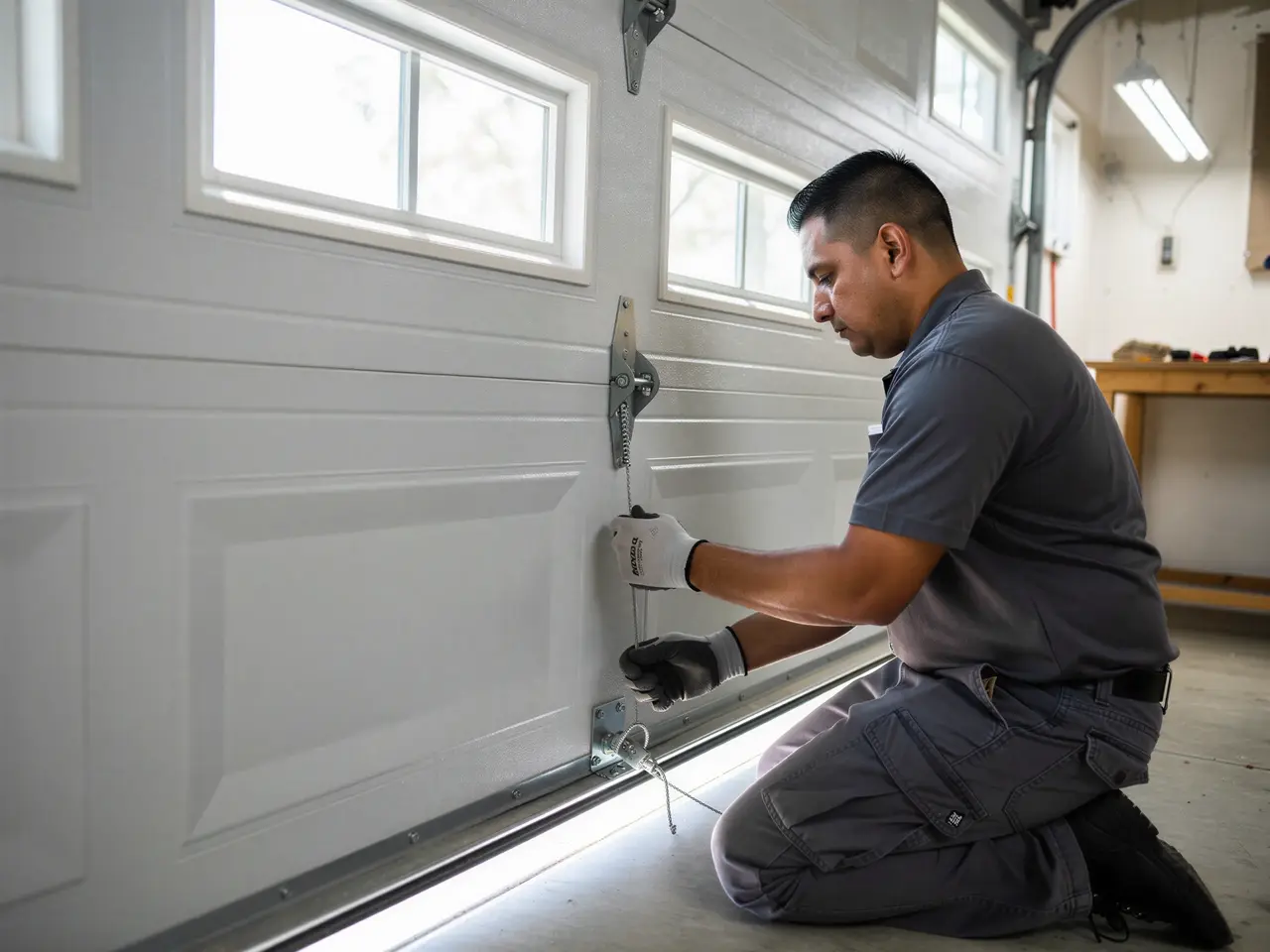
Cable repair means releasing tension on the spring system safely, pulling the old cable and often the drum, fitting the new ones, and re-tensioning the door so both sides lift evenly. It's not a job to do yourself - the spring holds enough stored energy to cause real injury if it lets go while you're working near it.
Once the new cable and drum are in, the door gets balance-tested: disconnected from the opener, it should hold roughly level at any point in its travel. If it doesn't, something else on the hardware is off and needs attention before we call the job done. A cable swap on its own is usually a straightforward same-visit repair; it only runs longer if the drum, spring, or track also need work, which happens more often on doors that have been neglected for years.
Frequently asked questions
Why do my garage door cables keep fraying?
On houses in this area built mostly in the 1980s and 90s, original cables are reaching or past their cycle life. Cold winters add stress on top of that age, since steel cable behaves less forgivingly at low temperatures. Frayed cables are usually a sign of age plus winter use, not a defect.
Can I drive on a door with a broken cable?
No. A door with one cable broken is unevenly loaded on the remaining hardware, and the opener can strain trying to compensate. Leave the door closed if possible and call for a repair rather than cycling it.
Do you always have the cable in stock?
For standard torsion and extension setups common on doors from the 1980s through the 2000s, yes. Older low-headroom or non-standard spring systems sometimes require ordering, and we'll tell you upfront if that applies to your door.
Is cable repair a DIY job?
We don't recommend it. The torsion or extension spring holds enough stored tension to cause serious injury if released incorrectly while replacing a cable or drum. It's a job for someone who releases that tension safely as routine work.
Book garage door service in West Des Moines
Call now or request a quote - tell us what the door is doing and where you are.