
West Des Moines, IA · Garage Door Service
Why Your Garage Door Lets the Cold In
West Des Moines houses built mostly in the 1980s and 90s lose heat through worn garage door seals every cold snap. Here's what changes, why, and how to check your own door.
- Repairs & new doors
- Springs & openers
- Serving 4 nearby communities
What Changes With the Season
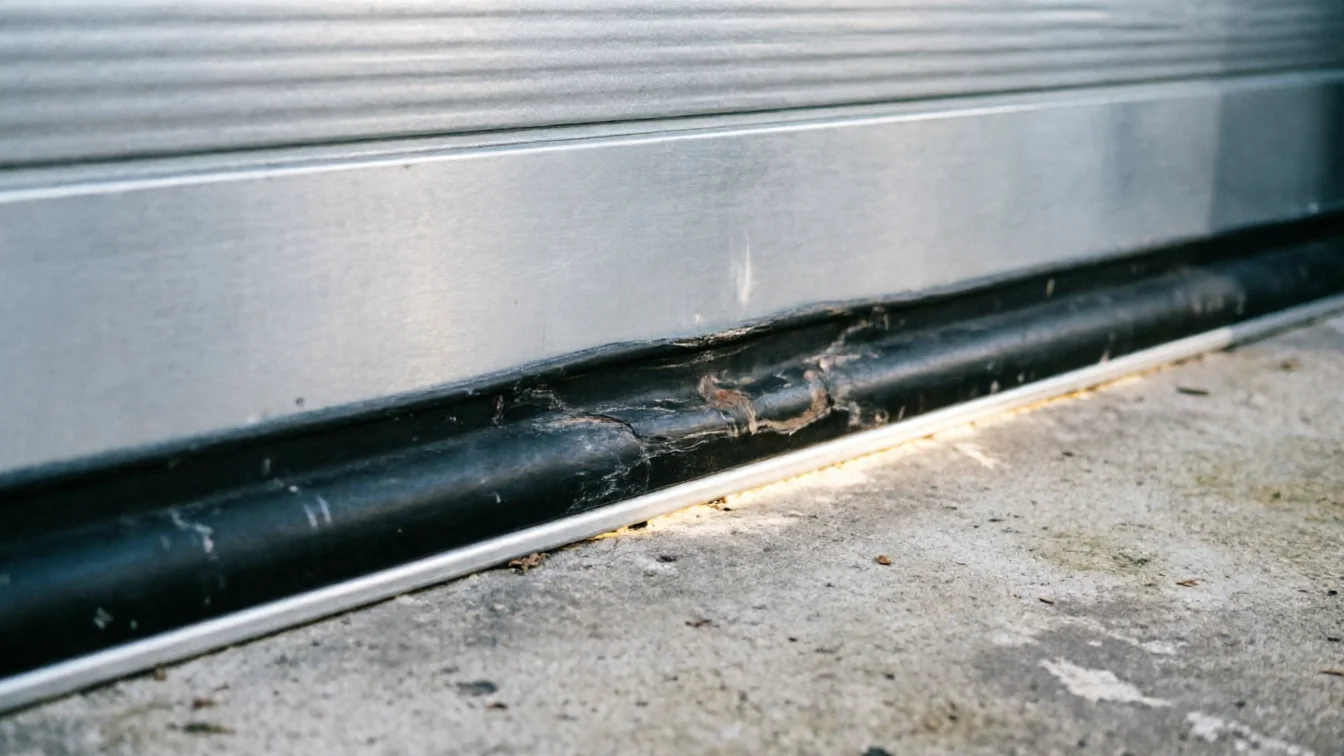
West Des Moines sits in a moderate cold climate band, which means the garage door on your house works through real freeze-thaw cycles every winter, not just a few cold mornings. The bottom seal, the weatherstripping along the jambs, and the threshold seal all get pushed and pulled as temperatures swing. Rubber that was pliable in October turns stiff by January, and once it stiffens it stops filling the gap between the door and the slab. That gap is where drafts come from, and it's also where meltwater and road salt track in under the door.
Most of the housing stock in this area dates from 1938 to 2009, with the median build year landing in 1987. A door and frame installed when a house went up in the late 80s has had three decades of this freeze-thaw cycling to work the seals loose, the track alignment slightly off, and the hardware a little looser than it was the day it was hung. None of that is damage in the sense of something broken - it's wear, and it shows up first as cold air at floor level and a door that feels heavier to lift in January than it did in July.
What Local Conditions Do
Because the area's housing stock runs mostly 1980s and 90s construction across the named neighborhoods and surrounding towns, a lot of garage doors here share the same weak points at the same age. Vinyl or rubber bottom seals from that era weren't built for 30+ winters, and once a seal compresses and cracks, cold air finds the path of least resistance along the full width of the door, not just at the corners.
The moderate cold climate band this area sits in also means the ground under a slab can shift slightly through winter, which is enough to throw a door's bottom seal out of even contact with the floor. You'll see this as a sliver of daylight at one corner even when the door looks shut tight. It's a small gap, but over a whole winter it adds up to a drafty garage and a colder wall on the other side of it if that garage shares a wall with living space.
This isn't a problem unique to any one house - it's a function of how old the average door and seal is relative to how many winters it's been through, which in a neighborhood built mostly in the 1980s and 90s means a lot of doors are due.
What Is Going On
When a homeowner calls about a drafty garage, the seal itself is rarely the whole story. On houses from the 1980s and 90s building wave common to this area, the original track hardware is often still in place, and over 30-plus years of seasonal temperature swings the brackets holding it can loosen just enough to let the door sit slightly crooked in the opening. A crooked door compresses its seal unevenly - tight on one side, gapped on the other - no matter how new the weatherstripping is.
In other cases the seal is fine but the threshold underneath it has worn down or cracked from years of the door's weight settling on the same spot, which is more common in houses nearer the older end of the 1938-2009 build range. Either way, the fix starts with figuring out whether you're looking at a seal problem, an alignment problem, or both, because replacing a seal against a misaligned door just buys you a few months before the gap comes back.
Checking It Yourself
Close the door and walk around the outside with a flashlight at dusk - if light shows anywhere along the bottom or sides, that's your draft source. Run a hand along the bottom seal from end to end; it should feel evenly soft and should make full contact with the floor across the whole width. If it's stiff, cracked, or compressed flat in spots, it's done.
Check the corners specifically, since on older houses in this area the track hardware has had decades to work loose and a crooked door shows up first as a gap that's worse on one side than the other. If the gap looks even but still lets air through, the seal itself has likely hardened past the point of sealing well, which is normal after enough winters in a cold climate band like this one.
One honest limit here: a seal swap is a straightforward fix, but if the door is sitting crooked because the track brackets have shifted, no amount of new weatherstripping solves that on its own. That's a track and hardware job, not a seal job, and it's worth knowing the difference before you buy a strip of rubber that won't fix what's actually wrong.
Frequently asked questions
Why does my garage door let in cold air even with new weatherstripping?
New weatherstripping only seals well against a door that's sitting straight in its track. On houses from the 1980s and 90s building wave common here, track hardware has often loosened over the decades, leaving the door slightly crooked. That gap won't close no matter how new the seal is until the alignment is corrected.
How often should I replace garage door seals in this climate?
There's no fixed schedule in the facts available, but the moderate cold band this area sits in means seals work through real freeze-thaw cycling every winter, which ages rubber faster than a milder climate would. Check the bottom seal each fall for stiffness or cracking rather than going by age alone.
Is a drafty garage door a sign of a bigger problem?
Sometimes. A worn seal is a simple fix, but a door that's crooked in its opening - more common on older hardware typical of this area's 1980s-90s housing stock - points to loosened track brackets, which is a different repair. Checking for uneven gaps at the corners tells you which one you're dealing with.
Related garage door services in West Des Moines
More garage door guides
Book garage door service in West Des Moines
Call now or request a quote - tell us what the door is doing and where you are.