
West Des Moines, IA · Garage Door Service
Panel Replacement for Indianola's 1980s-Era Garage Doors
Indianola homes built around 1980 often carry steel panel doors with profiles no longer made. We match what we can and replace full sections when we can't.
- Repairs & new doors
- Springs & openers
- Serving 4 nearby communities
What Causes It Around Here
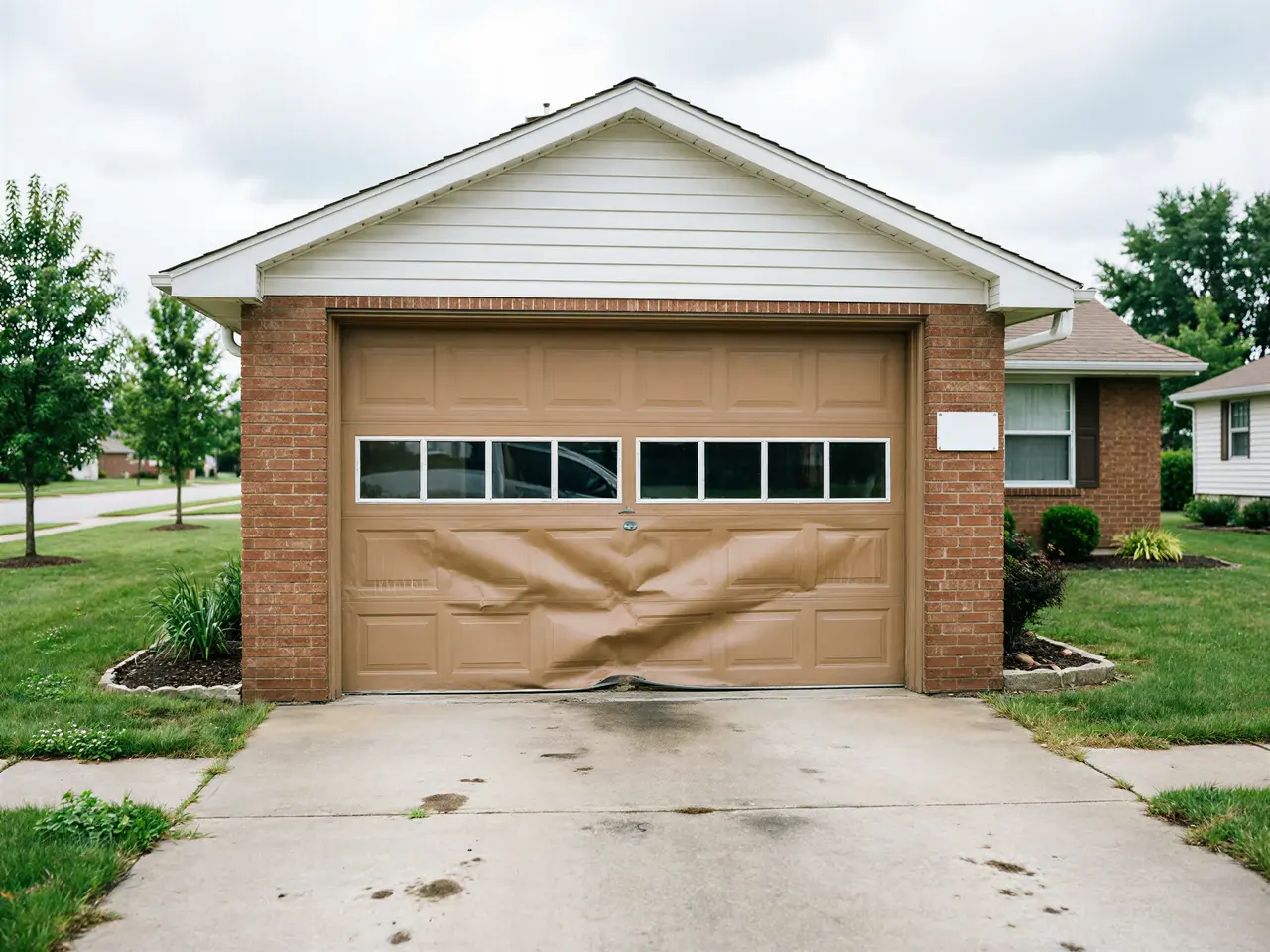
The panel call we get from Indianola almost always starts the same way: a dent, a crack, or a rusted-through seam on one section of a door, and the owner hoping we can just swap that one piece. The trouble is the door itself. Indianola's housing stock centers on 1980, which means a lot of garages still carry the steel panel doors that shipped standard that decade - often a single layer of steel over a plain stamped ribbed or raised-panel face, no foam core, no composite backing. Those doors were built to a profile that the manufacturer has since dropped or changed enough that the new version doesn't sit flush next to a 40-year-old section. Add in Iowa's cold swings and the thin steel used back then dents easier and rusts faster at the bottom panel where snowmelt and road salt sit against it all winter. By the time someone calls, it's usually not one dent - it's one dent plus a rusted bottom rail plus a panel that's already been bent back once.
We don't guess at what's underneath. On a 1980-built door, the panel profile, the hinge spacing, and even the steel gauge can vary section to section if a previous owner already swapped one panel years ago. That's the first thing we check before quoting anything.
What Can Go Wrong
Replacing a single panel sounds simple until the match doesn't exist anymore. If your door's profile was discontinued - common on doors from the early 1980s - we may only be able to source a close match, not an exact one, and that mismatch will show under daylight even after paint. Sometimes the better call is replacing two adjacent panels so the seam lines up and the color doesn't fight itself.
The other failure point is structural, not cosmetic. A cracked or heavily dented panel section on an older door often means the hinges and rollers bolted to it have been working at an angle for a while, which stresses the track and the opener's travel limits. Swap the panel alone and ignore that, and the new section takes the same beating within a year. On a door this old, we check hinge wear and track alignment before we touch the panel, because fixing the skin and leaving the frame problem underneath isn't a repair - it's a delay.
Here's the honest limit: if more than two sections are damaged, or the door's track is bowed from the stress, panel replacement usually costs close to a full door replacement by the time labor and parts freight are added up. We'll tell you that straight rather than patch a door that's done.
Getting It Booked In
We run this job from West Des Moines, about 17 miles out, so when you call we ask for the panel size, the door's approximate age, and a photo of the damage and the full door before we load the truck. That lets us pull the right panel stock - or know we need to special-order one - instead of showing up to find out the profile doesn't match.
Indianola's median household income runs lower than some of the suburbs closer in to West Des Moines, and we price the repair on what the job actually needs: a single clean panel swap costs a lot less than hunting down a discontinued match or redoing hinge hardware across the whole door. We'll walk you through which situation you're in before we start cutting anything loose.
What the Repair Takes
A straightforward single-panel swap on a door where the profile is still available usually means pulling the hinges off the old section, freeing it from the adjoining panels, and bolting in the replacement - then resetting roller alignment since even a few degrees off will bind the track. If the panel has to be special-ordered because the original profile is discontinued, that adds lead time; we're not going to promise a date before the supplier confirms one.
Where the bottom panel is the one that's gone - the most common spot on a 1980s steel door thanks to decades of snowmelt and salt sitting against it - we also check the weatherstrip retainer and the bottom seal track, since rust there usually runs further up than it looks from outside. Replacing the panel without addressing that just means the next cold season reopens the same spot.
For doors where the hardware era doesn't match current standard spacing, we adjust hinges and track brackets as part of the job rather than forcing a modern panel onto 40-year-old mounting points. That's part of what separates a panel job on a door like this from the same job on a newer build.
Frequently asked questions
Can you match the panel on my Indianola garage door exactly?
It depends on the door's age. If your home dates to around 1980, like most of Indianola, the original panel profile may be discontinued. We check the make and style before quoting - sometimes we get an exact match, sometimes the better fix is replacing two adjacent panels so the seam lines up.
Why is the bottom panel always the one that fails first?
On older steel doors, the bottom section sits closest to snowmelt, road salt, and ground moisture through Iowa winters. Rust eats through that panel years before the others, especially on single-layer steel doors common in 1980s-built homes.
Do you travel to Indianola for a single-panel repair?
Yes, we cover Indianola from our West Des Moines location, about 17 miles out. We ask for photos and a rough door age up front so we bring the right panel stock or know to special-order before the truck rolls.
Is it cheaper to replace one panel or the whole door?
If only one or two sections are damaged and the profile is still available, a panel swap costs less than a full door. If the track is bowed or more than two panels are hit, the math often favors full replacement - we'll tell you which situation you're in before we start.
More garage door services in Indianola
Book garage door service in West Des Moines
Call now or request a quote - tell us what the door is doing and where you are.