
West Des Moines, IA · Garage Door Service
Why Your Garage Door Jumps the Track
West Des Moines homes built between 1938 and 2009 face freeze-thaw track shifts each winter. Here's what causes it and how to spot it before the door jams.
- Repairs & new doors
- Springs & openers
- Serving 4 nearby communities
What Changes With the Season
West Des Moines sits in a cold, moderate climate band, which means the ground under your slab and the steel in your track both move through a real freeze-thaw cycle every year, not just a cold snap or two. As temperatures swing from single digits in January to summer heat, the galvanized track brackets expand and contract against the framing they're bolted to. Over one winter that's a small shift. Over the fifteen or twenty winters a lot of these doors have been through, the bolts work loose and the track stops sitting plumb. That's the mechanical root of most off-track calls we see once the weather turns. It's not a flaw in any one door - it's what this climate does to any track-and-roller system left unchecked for years.
What Local Conditions Do
Housing stock across this area runs from 1938 up through 2009, with the bulk of it dating to the 1980s and 90s across the 26 named neighborhoods in the service area. That matters here specifically: a door installed during that build-out is now 25 to 40 years old, old enough that the original rollers have worn from round to slightly oval and the track has absorbed decades of seasonal movement. Newer construction mixed in from the 2000s doesn't dodge this either - it just has fewer freeze-thaw cycles behind it so far. The practical effect is that a big share of garages in this market are sitting right at the age where track fasteners loosen and roller wear starts to show as a door that walks sideways instead of running straight.
What Is Going On
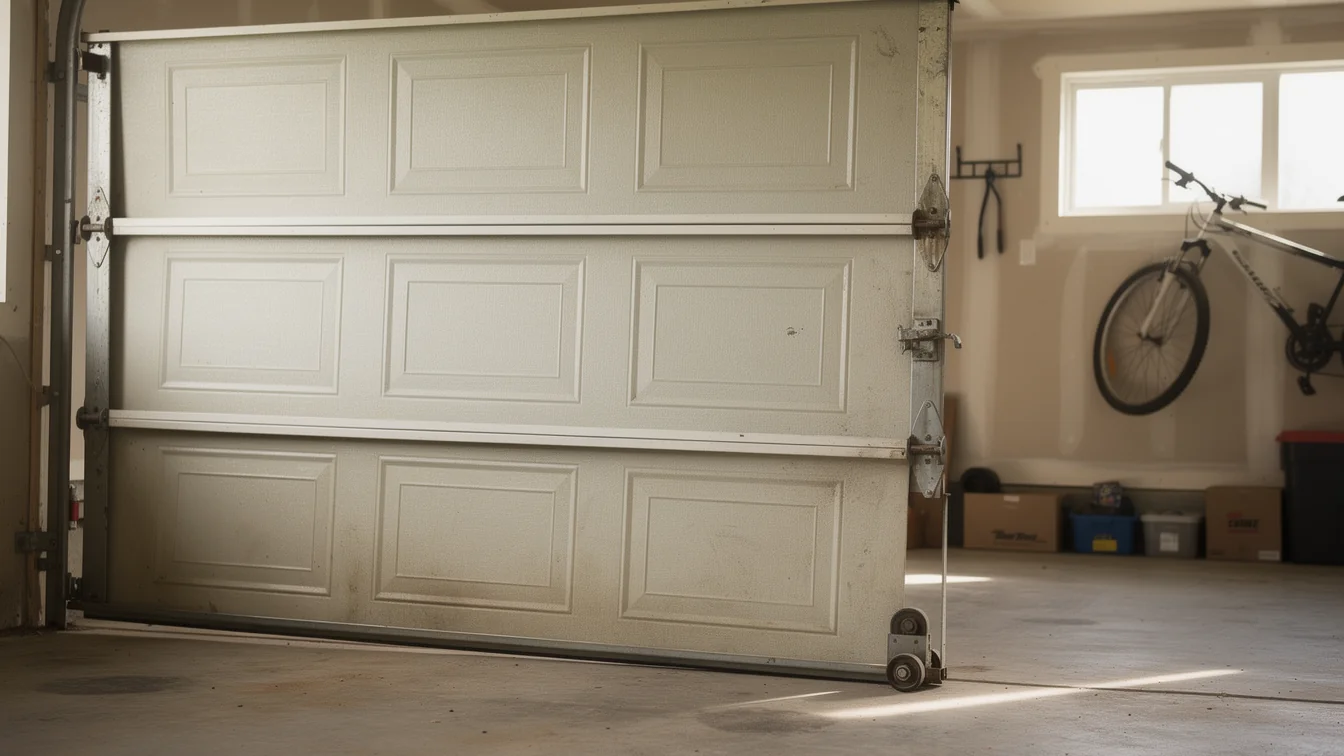
When a door goes off track, it's rarely one dramatic event. Usually it's a slow accumulation: a bent track section from a bump years ago, a roller that's worn down enough to rattle loose in the channel, or a cable that's frayed and let one side of the door drop lower than the other. In a cold climate like this one, add slab movement - minor heave or settling at the track's base plate - and a track that was aligned fine in August can be a quarter inch off by February. The door doesn't have to hit anything to jump the track; it just has to run on hardware that's no longer square. Once it's off, forcing the opener to keep cycling usually bends the track further and can snap a cable.
Checking It Yourself
Start with the track itself: stand back and sight down both sides for gaps, dents, or spots where it's pulled away from the wall studs. Check roller condition where you can see it near the bottom panel - cracked or chipped plastic rollers are a sign the rest are probably close behind. Listen for a grinding or popping sound as the door moves, which often means a roller is binding in a bent section. We won't tell you to adjust the track yourself or touch anything under spring tension - that's where people get hurt, and it's also where a five-minute fix turns into a bent track or a broken cable if it's done without the right clamps. If the door is visibly crooked or one side hangs lower than the other, stop running the opener and get it looked at.
Frequently asked questions
Why did my garage door suddenly come off the track this winter?
Cold-weather contraction on an older track, combined with a slab that shifts slightly through freeze-thaw cycles, can push a track that was already a little loose past the point where the rollers stay seated. It's rarely sudden damage - it's usually months of small movement catching up at once.
Is it safe to push the door back on the track myself?
No. A garage door is under heavy spring tension even when it looks still, and a door off its track can shift unpredictably while you're near it. Leave the track and cable work to someone with the right clamps and experience.
My house was built in the 1980s - is my track original?
Possibly. A lot of the housing in this area dates to the 1980s and 90s, and if the track has never been replaced, it's old enough that worn rollers and loosened fasteners are common at this age, especially after many winters of expansion and contraction.
Does a newer house still have this problem?
Yes, just less of it so far. Houses built in the 2000s haven't been through as many freeze-thaw cycles, but the same cold-climate movement applies - it just takes longer to show up as a misaligned track.
Related garage door services in West Des Moines
More garage door guides
Book garage door service in West Des Moines
Call now or request a quote - tell us what the door is doing and where you are.