
West Des Moines, IA · Garage Door Service
When a Spring Goes in Cold Weather Here
Why West Des Moines garage door springs break in winter, tied to the area's 1938-2009 housing stock and cold climate band. What to check before you call.
- Repairs & new doors
- Springs & openers
- Serving 4 nearby communities
What Changes With the Season
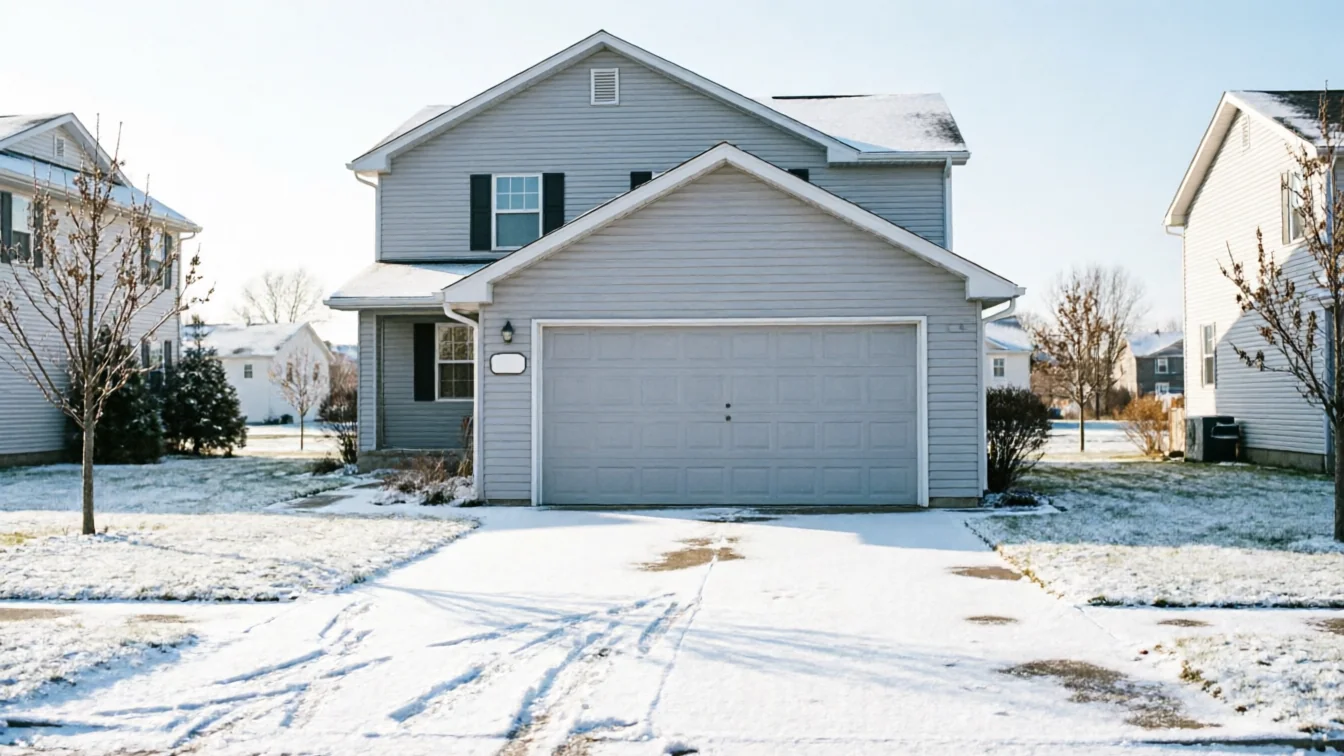
West Des Moines sits in a cold moderate climate band, and that matters more for your garage door than most homeowners think. Steel torsion springs lose flex as the temperature drops. The metal contracts, the coil tightens a hair, and a spring that's already near the end of its cycle count can snap on the first cold morning rather than fail gradually in August. You don't get a warning squeak most of the time. You get a loud bang in the garage and a door that won't lift.
This isn't unique to any one street, but it's worse here because of how old the average spring in this area actually is. A lot of the housing in this service area dates to the 1938-2009 range, with the bulk of it built in the 1980s and 90s. That means a sizable share of the garage doors out there are running original or first-replacement springs that have already seen thirty-plus winters. Cold doesn't create the weakness. It finds it.
What Local Conditions Do
Across the 26 named areas that make up this service territory, the housing stock leans heavily 1980s-90s, which lines up with a specific generation of garage door hardware: steel torsion springs rated for a cycle count that most of them have now exceeded, paired with openers that were never built with today's load sensors. When a cold snap hits, two things happen at once. The spring metal stiffens, raising the force needed to lift the door, and the opener's motor has to work harder to compensate. On a door with a spring that's already fatigued, that extra load is what pushes it past the point of no return.
Houses built closer to 2009 in newer pockets of the area tend to have galvanized springs with better cold tolerance, but they're not immune. Cold moderate doesn't mean brutal, like you'd see further north, but it's consistently enough below freezing for enough weeks each winter that steel fatigue adds up year over year. If your door has never had the spring replaced and the house is older than fifteen years or so, cold weather is when that bill usually comes due.
What Is Going On
When a torsion spring breaks, the door effectively has no counterbalance. The opener will try to lift the full weight of the door on its own, which it isn't built to do for long. Keep using the opener after a spring breaks and you risk burning out the motor or stripping the gears, turning a spring job into a spring-and-opener job.
Given the age spread in this area's housing, median built-year 1987, we see a mix of original single springs on older single-car doors and dual-spring setups on the two-car doors that became standard as homes got built out through the 90s and 2000s. The fix depends on which you have, and on whether the drums, cables, and end bearings have held up or need replacing alongside the spring. A spring-only repair on worn-out bearings is a short-term fix at best - replacing just the part that snapped while leaving tired hardware in place usually means a second call within a year or two. That's the honest tradeoff: sometimes the cheaper repair now costs more over time.
Checking It Yourself
Before you call anyone, there's a safe way to check if cold is close to taking out your spring. With the door closed and the opener disconnected (pull the red release cord), try lifting the door by hand. It should move with moderate, even effort and stay roughly where you let go. If it feels heavy, drops on its own, or the lift is noticeably harder than it was in warmer months, the spring is losing tension and cold is accelerating that.
Do not try to adjust or remove a torsion spring yourself. It's under enough stored tension to cause serious injury, and that's true regardless of how old the house is. What you can check safely: the balance test above, a visual look at the spring coil for a visible gap or separation (a sign it's already broken), and whether the door makes a louder-than-usual scrape or bang when it has been closed overnight in cold temperatures. Any of those is reason enough to get it looked at before the next cold stretch, rather than after the spring lets go.
Frequently asked questions
Why do garage door springs break more in winter here?
Cold moderate winters in this area cause steel torsion springs to stiffen and lose flex. Combined with a lot of area housing dating to the 1980s-90s, many springs are already near the end of their cycle life, and the added cold-weather load is what finally breaks them.
Is it safe to keep opening the door with the opener after a spring breaks?
No. With a broken torsion spring, the opener has to lift the full weight of the door alone, which can burn out the motor or strip the gears. Disconnect the opener using the release cord and leave the door until the spring is replaced.
How do I know if my spring is original to the house?
If your home was built in the 1980s or 90s, which covers a lot of this service area, and you've never had a spring replacement done, it's likely original or close to it. Decades-old steel springs are the ones most likely to fail in a cold snap.
Related garage door services in West Des Moines
More garage door guides
Book garage door service in West Des Moines
Call now or request a quote - tell us what the door is doing and where you are.